Tampón de lisis RIPA de alta calidad (fuerte) para tejidos y células (con PMSF)
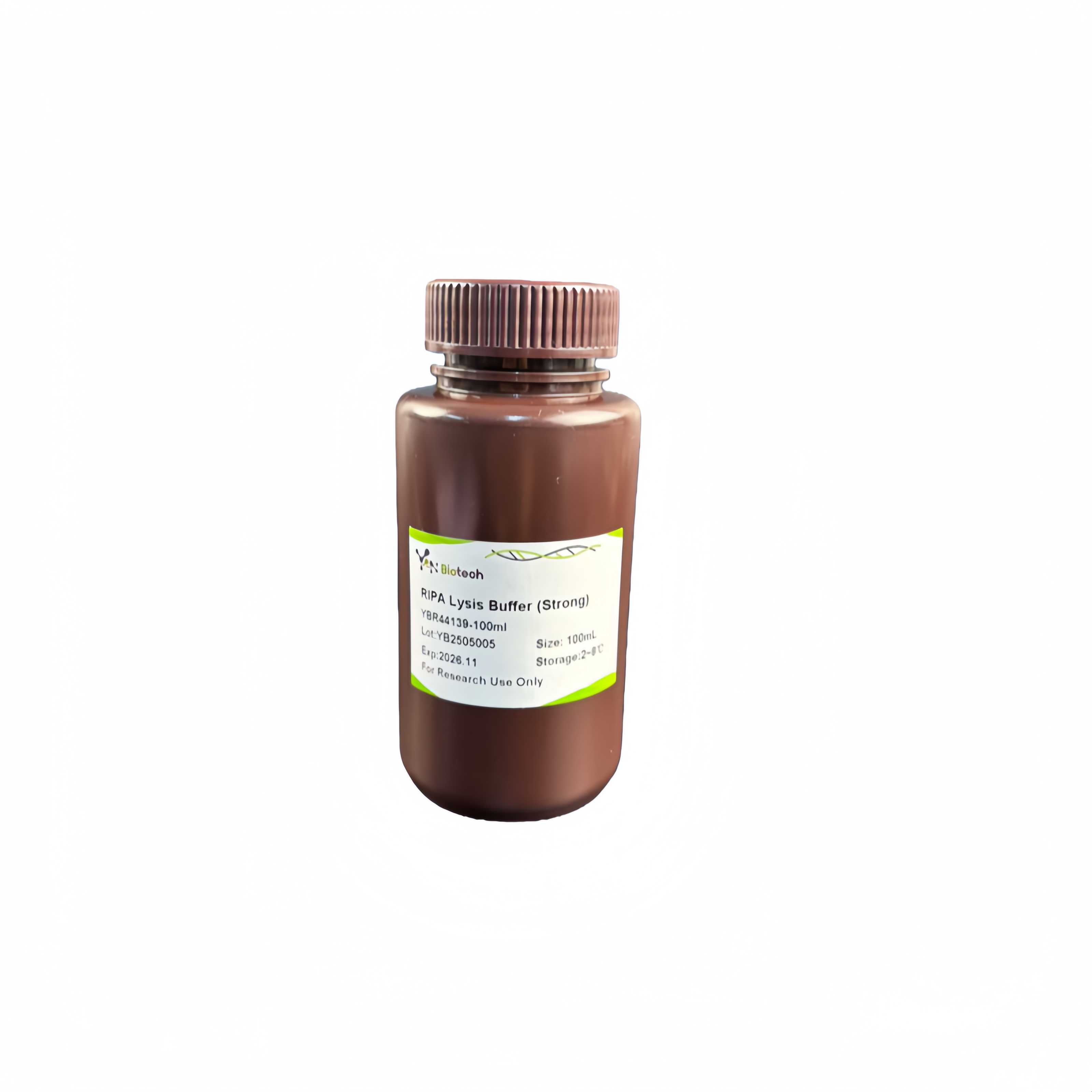
Un tampón de lisis rápida tradicional para células, tejidos o protoplastos vegetales.
Gato. No. :
YBR44139-100MLMarca :
YanbiotechOrigen del producto :
ChinaVolumen :
100mLIntroducción del producto
Información del producto:
| N.º de cat. | Nombre del producto | Embalaje |
| YBR44139-100ml | RIPA Tampón de lisis (Fuerte) | 100 ml |
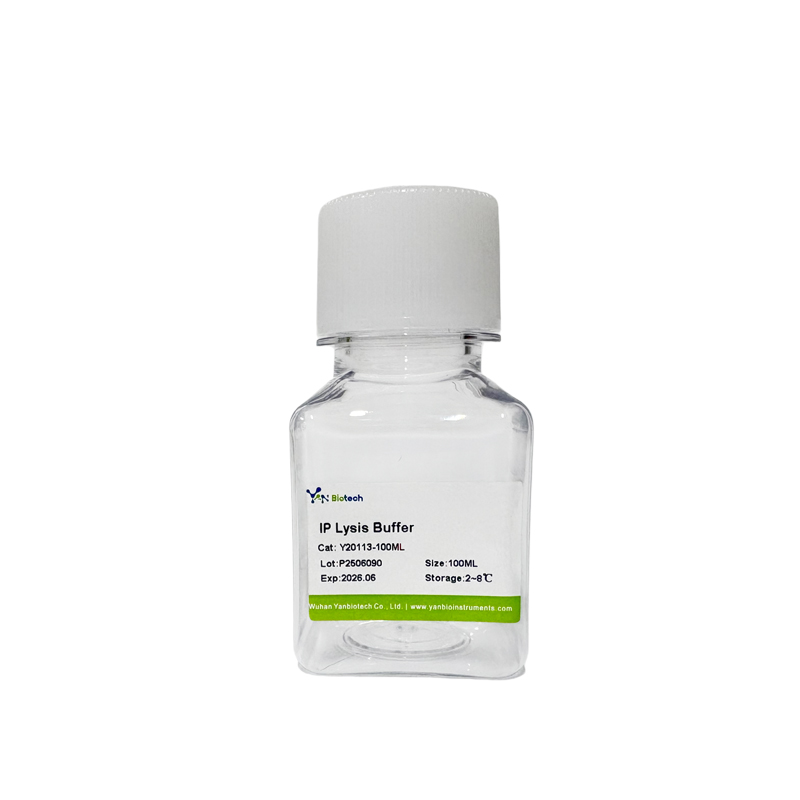
El tampón de lisis Plant RIPA de Yanbiotech es un tampón tradicional de lisis rápida para células, tejidos o protoplastos vegetales. Las muestras de proteína obtenidas con el tampón de lisis Plant RIPA pueden utilizarse para PAGE de rutina, Western blot, inmunoprecipitación (IP), co-inmunoprecipitación (Co-IP), ELISA, etc.
Este producto se puede utilizar para muestras de células, tejidos o protoplastos vegetales, así como para muestras de células o tejidos animales, hongos o bacterias.
RIPA significa originalmente ensayo de radioinmunoprecipitación.
Los principales ingredientes activos del tampón de lisis Plant RIPA (fuerte) incluyen 1 % de Triton X-100, 1 % de desoxicolato de sodio y 0,1 % de SDS (detergentes), así como diversos inhibidores como ortovanadato de sodio, fluoruro de sodio, EDTA y leupeptina. Puede inhibir eficazmente la degradación de proteínas.
La concentración de proteínas de las muestras lisadas con el tampón de lisis Plant RIPA puede determinarse mediante un kit de análisis de proteínas BCA. Debido a la alta concentración de detergentes, no se recomienda utilizar el método de Bradford para determinar la concentración de proteínas de las muestras lisadas con este tampón.
Condiciones de almacenamiento:
-20ºC ,12 meses.
Precauciones:
Para un rendimiento óptimo, evite los ciclos de congelación y descongelación excesivos. Se recomienda tomar una alícuota del producto después de descongelarlo para un solo uso.
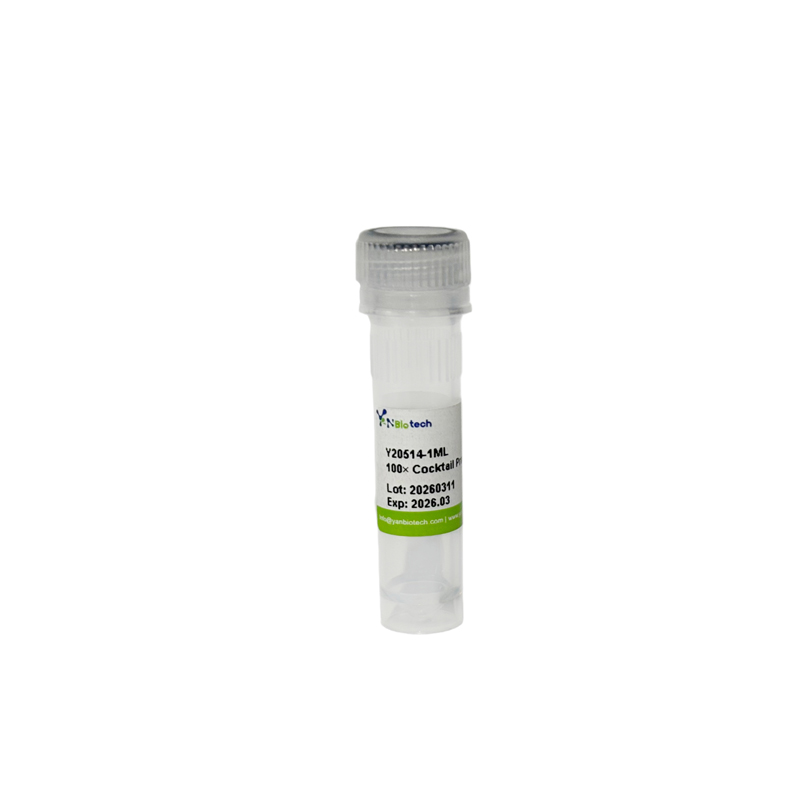
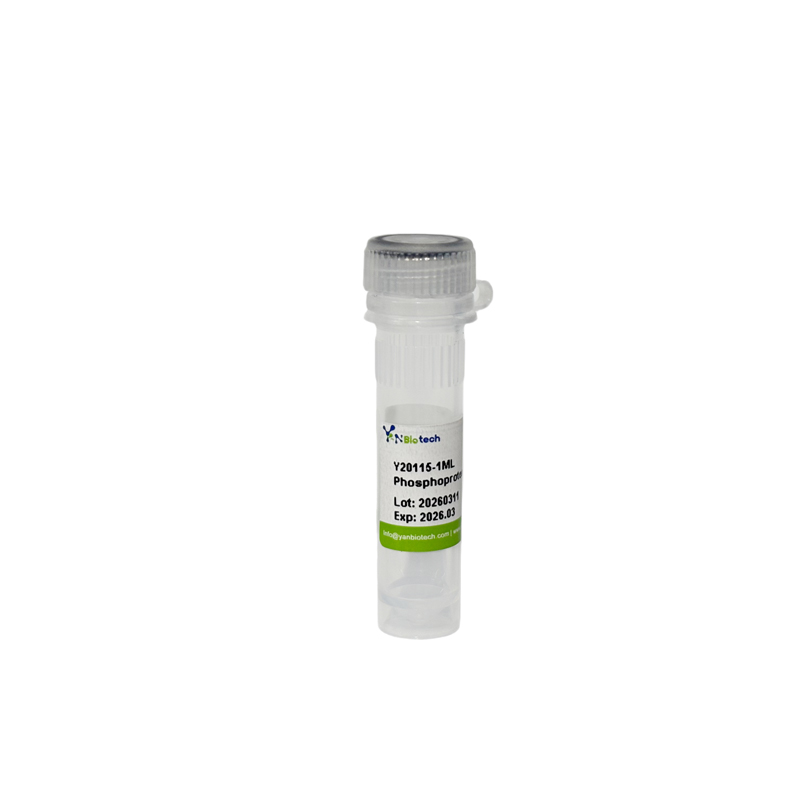
El PMSF debe ser preparado por el usuario. Alternativamente, puede adquirir el cóctel inhibidor de proteasa y fosfatasa (uso general, 50X) para un mejor efecto general, o seleccionar la mezcla de inhibidores adecuada según las aplicaciones específicas: cóctel inhibidor de proteasa y fosfatasa (para extracción de muestras de plantas, 50X), cóctel inhibidor de proteasa y fosfatasa (uso general, compatible con MS, 50X), cóctel inhibidor de proteasa y fosfatasa (para extracción de muestras de mamíferos, 50X), cóctel inhibidor de proteasa y fosfatasa (para extracción de hongos o levaduras, 50X), cóctel inhibidor de proteasa y fosfatasa (para extracción bacteriana, 50X). Si no se requiere la detección de proteínas fosforiladas, también se puede seleccionar un cóctel inhibidor de proteasa sin inhibidores de fosfatasa.
Todos los pasos para lisar las muestras deben realizarse en hielo o a 4 °C.
Este producto está destinado exclusivamente a profesionales cualificados para su uso en investigación. No debe utilizarse en diagnósticos ni tratamientos clínicos. No debe utilizarse en alimentos ni medicamentos. No almacenar en viviendas habituales.
Para su seguridad y salud, utilice bata de laboratorio y guantes desechables durante la operación.
Instrucciones de uso:
1. Para muestras de células vegetales cultivadas:
a. Descongele el tampón de lisis Plant RIPA y mézclelo bien. Poco antes de usarlo, añada PMSF a la cantidad adecuada de tampón de lisis hasta alcanzar una concentración final de 1 mM, o bien, añada el cóctel inhibidor de proteasas y fosfatasas adecuado según lo requiera el experimento.
b. Centrifugar para recolectar células vegetales. Añadir 100-200 µl de tampón de lisis por cada 0,5-1 millón de células. Pipetear varias veces para asegurar un contacto completo entre el tampón de lisis y las células. Lisar en hielo de 2 a 10 minutos.
c. Tras la lisis completa, centrifugar a 10 000-14 000 g durante 3-5 minutos. Recoger el sobrenadante para su posterior PAGE, Western Blot, inmunoprecipitación, etc.
2. Para muestras de protoplastos vegetales:
a. Picar el tejido en trozos pequeños y preparar protoplastos.
b. (Opcional) Transforme los protoplastos con plásmido, continúe cultivando durante 16 a 48 horas y aplique los tratamientos experimentales apropiados según sea necesario.
c. Recoger los protoplastos mediante centrifugación a baja velocidad a 100-500 g.
d. Descongele el tampón de lisis Plant RIPA y mézclelo bien. Poco antes de usarlo, añada PMSF a la cantidad adecuada de tampón de lisis hasta alcanzar una concentración final de 1 mM, o bien añada el cóctel inhibidor de proteasas y fosfatasas adecuado.
e. Añada 100-200 µl de tampón de lisis por cada 0,5-1 millón de protoplastos. Golpee suavemente el fondo del tubo para lisar completamente las células. Tras la lisis completa, no debe quedar ningún sedimento significativo de protoplastos. Si la cantidad de protoplastos es grande, debe alicuotarse en tubos con 0,5-1 millón de protoplastos cada uno antes de la lisis. Los grupos grandes de 0,5-1 millón de protoplastos son difíciles de lisar completamente, mientras que cantidades más pequeñas (0,5-1 millón) son relativamente más fáciles de lisar completamente, ya que el tampón de lisis puede entrar en contacto con ellos con mayor facilidad.
3. Para muestras de tejido vegetal:
a. Picar el tejido vegetal en pequeños fragmentos.。
b. Descongele el tampón de lisis Plant RIPA (fuerte) y mézclelo bien. Poco antes de usarlo, añada PMSF a la cantidad adecuada de tampón de lisis hasta alcanzar una concentración final de 1 mM, o bien, añada el cóctel inhibidor de proteasas y fosfatasas adecuado.
c. Añada 100-200 µl de tampón de lisis por cada 20 mg de tejido vegetal. (Si la lisis es insuficiente, se puede añadir más tampón de lisis según corresponda. Si se requiere una mayor concentración de proteína, se puede reducir la cantidad de tampón de lisis según corresponda).
d. Homogeneizar con un homogeneizador de vidrio o un triturador de tejidos manual hasta su completa lisis. Como alternativa, la muestra de tejido puede congelarse, triturarse en nitrógeno líquido y, tras una trituración completa, añadir el tampón de lisis.
e. Tras la lisis completa, centrifugar a 10.000-14.000 g durante 3-5 minutos. Recoger el sobrenadante para su posterior PAGE, Western Blot, inmunoprecipitación, etc.
f. Si el tejido vegetal es muy fino y tierno, se puede cortar adecuadamente y añadir directamente al tampón de lisis. Agitar vigorosamente para lisar completamente la muestra. A continuación, centrifugar de forma similar para recoger el sobrenadante para experimentos posteriores. La ventaja de la lisis directa es su comodidad, ya que elimina la necesidad de homogeneizadores o equipos de molienda. La desventaja es que la lisis puede no ser tan exhaustiva como con la homogeneización o la molienda.
Nota: Una pequeña masa gelatinosa transparente suele aparecer en el lisado del tampón de lisis Plant RIPA, lo cual es un fenómeno normal. Este gel transparente es un complejo que contiene ADN genómico, etc. Al detectar proteínas que no están estrechamente unidas al ADN genómico, el sobrenadante puede tomarse directamente para experimentos posteriores tras la centrifugación. Si se detectan proteínas muy unidas al genoma, este gel transparente puede romperse y dispersarse mediante sonicación, seguida de centrifugación para recoger el sobrenadante. Para detectar factores de transcripción comunes, la sonicación no suele ser necesaria.

Stay Connected With Us



Derechos de autor
@ Wuhan Yanbiotech Co., Ltd. Reservados todos los derechos
.
 RED SOPORTADA
Xml / política de privacidad
RED SOPORTADA
Xml / política de privacidad
 Español
 English
 Русский
 Español